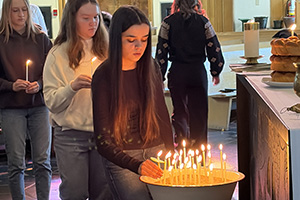
Vigil attendees experience Ukraine war through eyes of a child
Ukrainian-Canadian community marks fourth year since full-scale invasion of homeland
By Paul Sinkewicz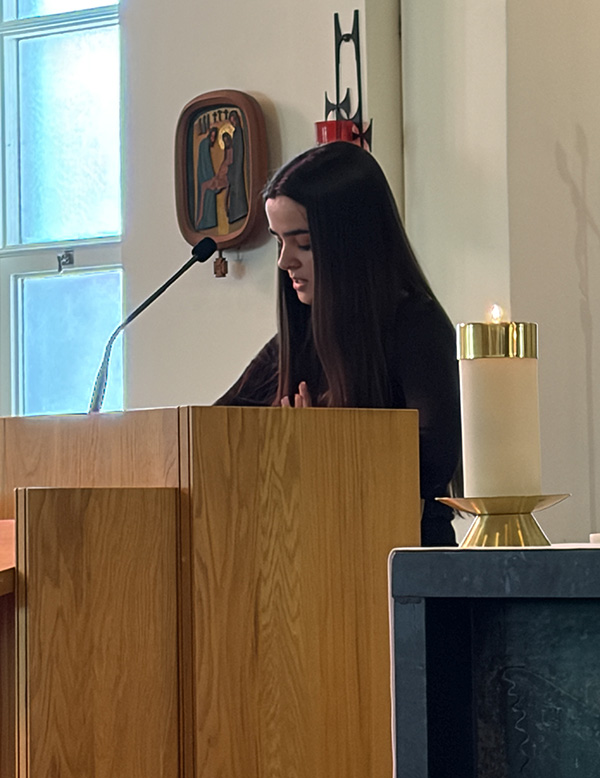
Solomiia Kulyk’s entire world was upended on Feb. 24, 2022, when Russian tanks and troops crossed the border with Ukraine.
The unprovoked invasion turned the entire country into a war zone and forced everyday Ukrainians to become heroes – and all-to-often martyrs -- of freedom as they fought to turn away the invaders.
Solomiia, now an 18-year-old member of the University of Saskatchewan Ukrainian Students’ Association (USUSA), shared painful childhood memories of the first hours of the war in Ukraine at a vigil held on Tuesday, Feb. 24.
“There are tears. Panic. Endless scrolling through the news,” said Kulyk. “That morning, my city’s airport was attacked. We did not wake up to rockets hitting our homes. But in Kharkiv, Kyiv, Dnipro, and many other cities, rockets were striking residential buildings, schools and streets. And in that moment, we understood that nowhere in Ukraine was truly safe.”
“We thought that was the worst day of our lives. We did not know that the worst was still ahead. Because after that day, war became part of our everyday life.”
Her family brought Kulyk to Saskatoon a year and half ago, where she has found support and comfort among the local Ukrainian-Canadian community. But Kulyk mourns the suffering of the people in her homeland.
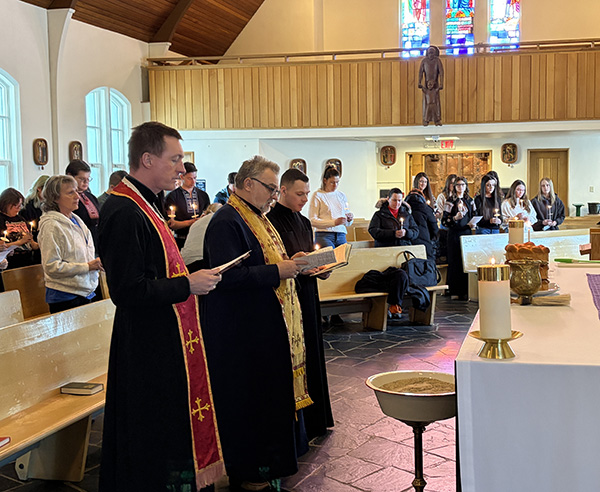
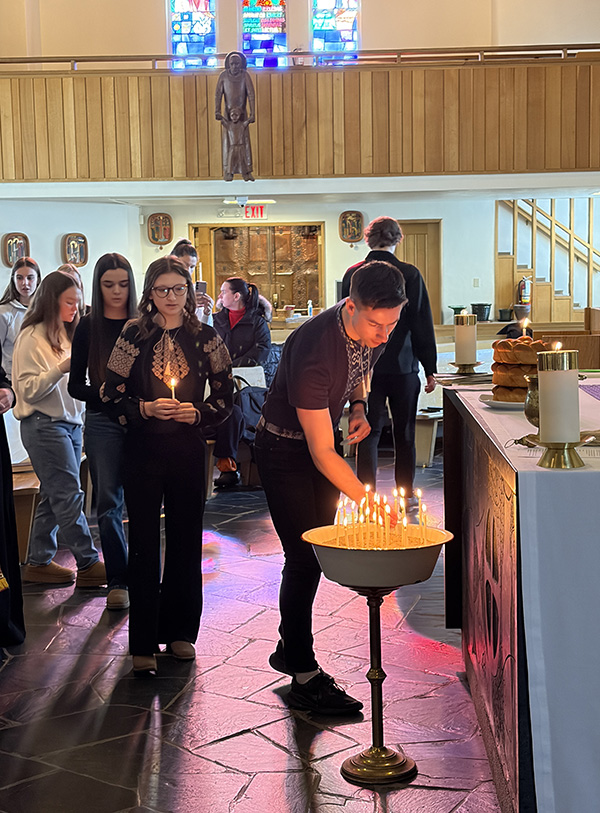
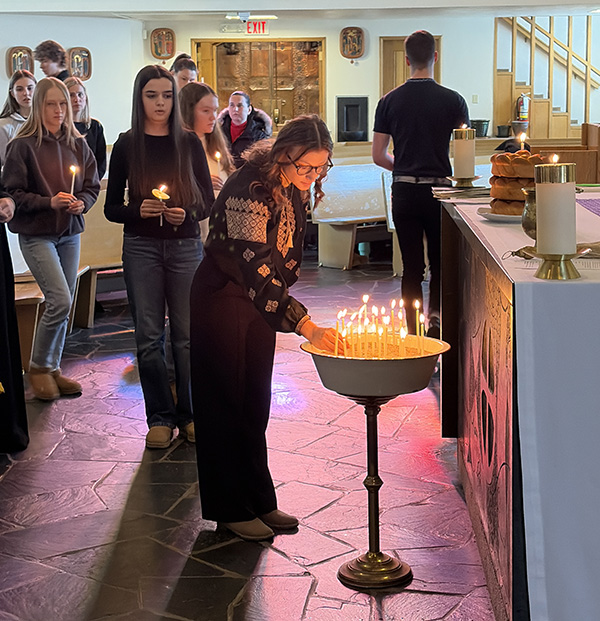
The vigil, held in the St. Thomas More College Chapel and hosted by USUSA, STM Campus Ministry, and the Prairie Centre for the Study of Ukrainian Heritage (PCUH), marked the fourth year since the full-scale invasion by Russia, although the aggression against Ukraine actually began in 2014 with the illegal annexation of Crimea and Russian-backed fighting in the Donbas region in the east.
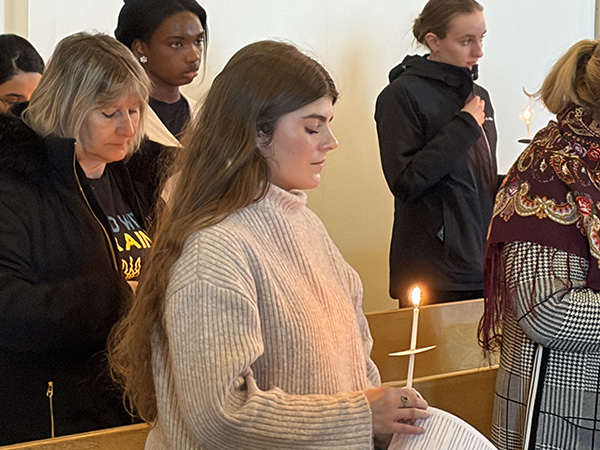
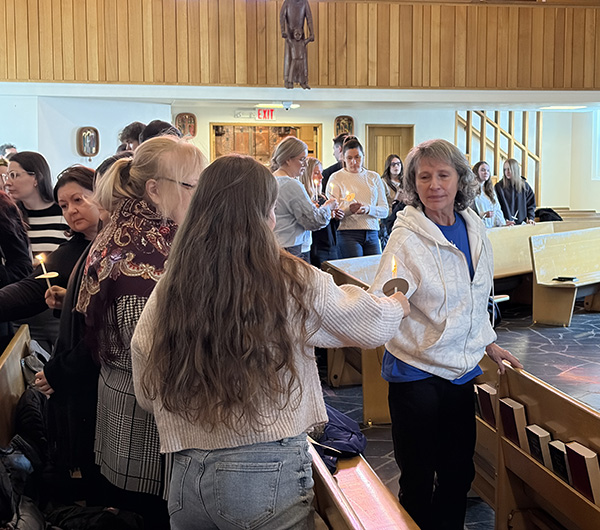
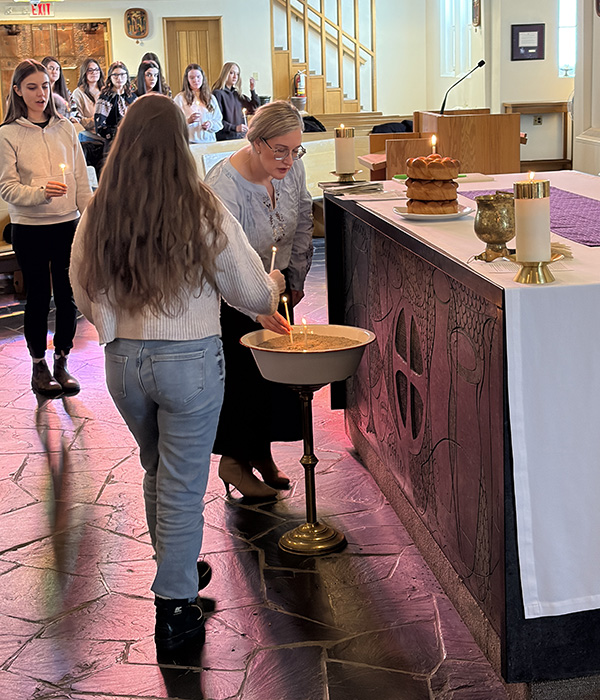
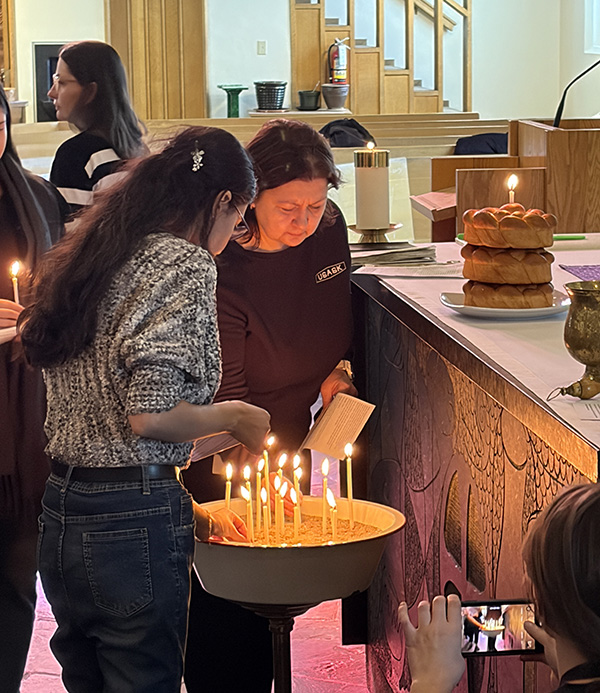
Taisa Rudy, USUSA President, invited attendees to each light a candle and observe silence in memory of those affected by the war.
“As we light candles today, we keep in our minds and hearts, the lives that have been lost, and the lives that are still fighting to defend the freedom of Ukraine,” Rudy said. “This vigil is a reminder for all of us that Ukraine is not alone in this fight for freedom, and the world is standing alongside them.”
Dr. Nadya Foty-Oneschuk, Interim Director of the Prairie Centre for the Study of Ukrainian Heritage (PCUH), said Canadian citizens have an important role to play in standing up to the Russian aggression.
“Our job here, far away from it all in Saskatoon, is to keep talking about this war. To keep countering with the systematic disinformation that works tirelessly to warp and twist the truth,” said Foty-Oneschuk. “To keep challenging those who believe what they read without understanding the geopolitics and history of the region.”
“Despite what you may think, each comment, each conversation, each attempt at creating awareness, makes a difference. And if nothing else, we hope on behalf of them, when the weight of inexhaustible woes becomes too heavy to bear. We continue to stand resolutely with Ukraine. Today, tomorrow, for as long as it takes.”
“Without them, without their courage, dignity, and willingness to keep fighting for democracy, our world would be much darker.”
What follows are the words shared by Solomiia Kulyk at the 2026 vigil:
Childhood memories include gnawing fear, horrors of war
Hello everyone.
For those who don’t know me, my name is Solomiia. I am a first-year business student here at the University of Saskatchewan. I am also a newcomer — my family and I moved here a year and a half ago.
Today we gather because of a tragic date in Ukrainian history — the fourth anniversary of the full-scale invasion. But for me, the story starts earlier. And I would like to tell you my story from the very beginning.
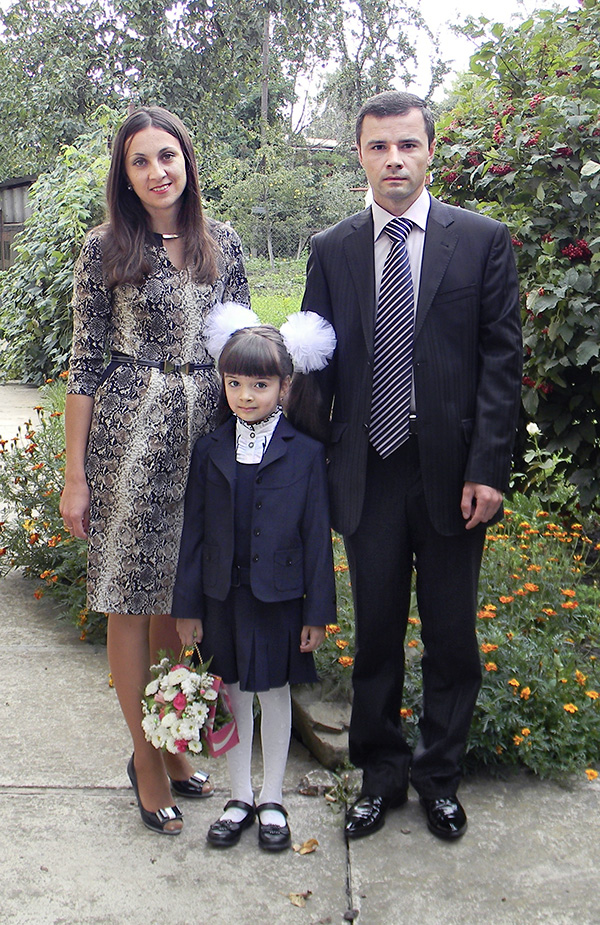
I am six years old. It is September 2013. I am going to first grade — excited, happy, not knowing that this will be the last first school day when Ukrainian children study under a peaceful sky. A few months later, the Euromaidan protests begin in Kyiv. Young people and students stand for Ukraine’s independence and its European future. The protests last for months. Hundreds of people are killed and injured. But they do not give up. In 2014, Russia annexes Crimea and occupies parts of eastern Ukraine. And the war begins.
I am seven. Some of my classmates’ parents are already fighting. At school, we draw cards for soldiers and send them to the front lines. In our gym, volunteers weave camouflage nets.
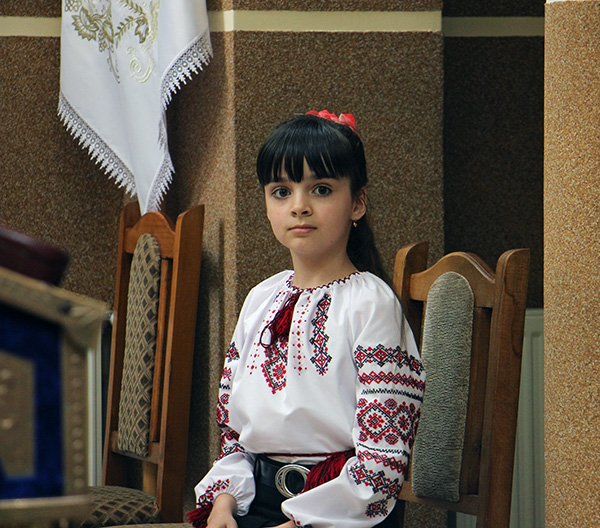
I am almost eight. Every evening, my parents watch the news. I sit nearby playing with my dolls, pretending not to listen — but I understand everything. When you grow up surrounded by war, you absorb it. Before my eighth birthday, I had only one wish: that on that day, I would not hear that someone had died. Not something an eight-year-old should wish for. But that was our reality.
I am 14. For years, we live both in war and not in war at the same time. When you live far from the front line, life can look normal. You go to school. You meet friends. You celebrate holidays. But you also get used to hearing about soldiers who were killed. Sometimes people your family knew. You get used to waiting for peace that never comes.
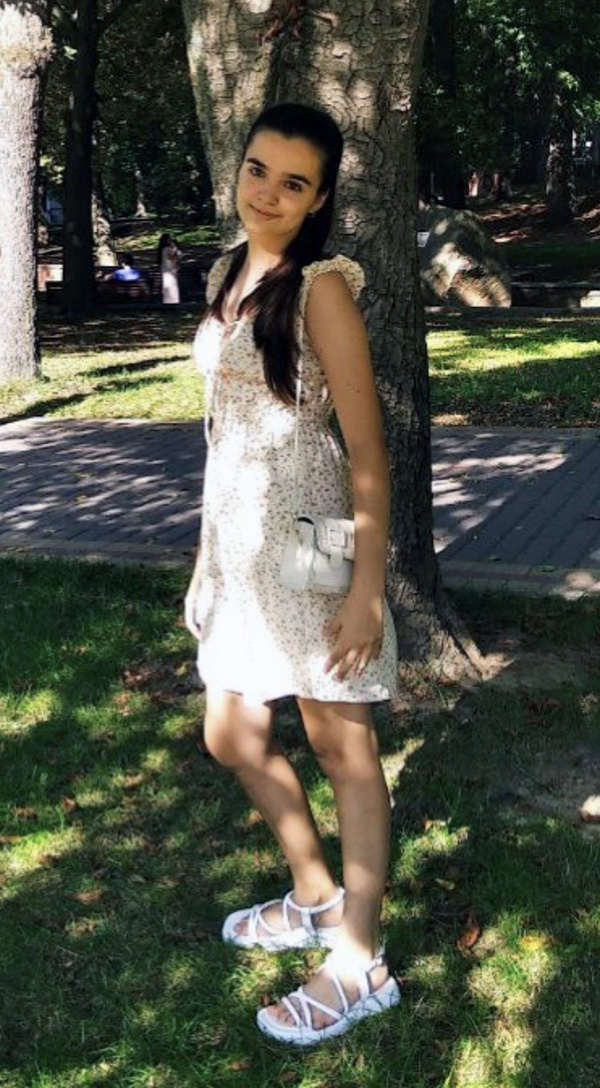
In the fall of 2021, talk about a full-scale invasion becomes more frequent. None of us truly believe it will happen. We think it is just another Russian threat. So, we continue living our lives.
A week before the invasion, our teachers take us to the school basement and explain what to do if war begins. We laugh. We film it on our phones. We think they are overreacting, that’s not going to happen.
However, few days later, everything changes.
February 24.
It’s 7 a.m., I am eating breakfast, thinking about my school day. And then my dad goes: “It started.” In that moment, my life divides into “before” and “after.”
There are tears. Panic. Endless scrolling through the news.
That morning, my city’s airport was attacked. We did not wake up to rockets hitting our homes. But in Kharkiv, Kyiv, Dnipro, and many other cities, rockets were striking residential buildings, schools and streets. And in that moment, we understood that nowhere in Ukraine was truly safe.
We thought that was the worst day of our lives. We did not know that the worst was still ahead. Because after that day, war became part of our everyday life.
There were power outages that lasted for hours. Sometimes we had electricity only for a few hours a day. We learned to charge our phones whenever the power came back — even late at night. We studied with flashlights. Whenever we heard the air raid alert, we stopped whatever we were doing and went to shelter.
More and more, cities were occupied. Places we had always known suddenly appeared in the news — taken, attacked, and changed forever. Later, some of them were liberated. And when Ukrainian flags were raised again, I remember the tears — tears of relief, pride, and pain for everything those cities had gone through. We celebrated the liberation of our land. But we also saw the destruction. Destroyed homes. Empty streets. Lives that would never be the same.
And through all of this, Ukrainians continue to stand. They work. They volunteer. They rebuild what was destroyed. They serve. They study by candlelight. They return to cities that were once occupied and start again from nothing. They stand together. They refuse to leave anyone behind. That is what a nation is. That is who Ukrainians are.
For centuries, attempts have been made to erase us. And still, we stand. And we will continue to stand — for our language, for our faith, and for a future without Russia.
And to finish this timeline:
I am 18 now, and standing here in front of you, I reflect how much has changed. I have been living in Canada for a year and a half. Ukraine is no longer the place where I wake up every morning — but it is still the place I carry in my heart. And it always will be.
While I was still in Ukraine, I often heard about the Ukrainian diaspora in Canada. I had heard how strong it was, how active, how united. But seeing it in action — seeing people organize events, volunteer, donate, learn Ukrainian language and history, dance Ukrainian dances, celebrate our holidays, and keep our culture alive — meant more than I can put into words.
No matter who you are — a third-generation Ukrainian or someone born in Ukraine — we are all Ukraine, together. And today, I want to say thank you. Thank you to everyone here who continues to stand with Ukraine.
Let's continue to pray, support, and believe for Ukraine's victory!
Дякую! Слава Україні!
(Thank you! Glory to Ukraine!)