Indigenous elders bring gift of renewed pride to younger generation
Knowledge Keeper visits yield multiple benefits in College's reconciliation process
By Paul Sinkewicz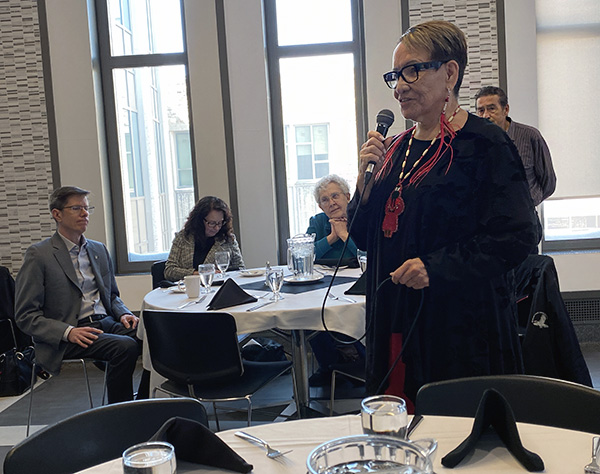
“There are 94 Calls to Action. Which one are you on?”
When a Nakoda elder asks you that question you can’t help but stop dead in your tracks.
But Tim Eashappie is not issuing a challenge. He’s offering an invitation. He’s holding out a hand and telling you that he’s willing to help get you started on the path of reconciliation with Indigenous peoples.
Eashappie is a Knowledge Keeper from the Carry the Kettle Nakoda First Nation, and he poses that question whether he’s speaking with students or high-ranking government officials.
Helping others respond to the Truth and Reconciliation Commission of Canada Calls to Action is a responsibility he takes on with passion, humour and kindness.
Now 67 years old, his mission to share Indigenous knowledge and cultural teachings is the culmination of a life’s journey that included attending a residential school, listening to stories and learning his language the traditional way -- at the feet of his grandparents, and travelling North America as a proud powwow dancer from a very young age.
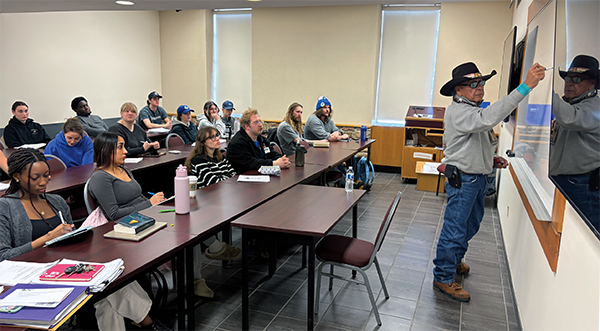
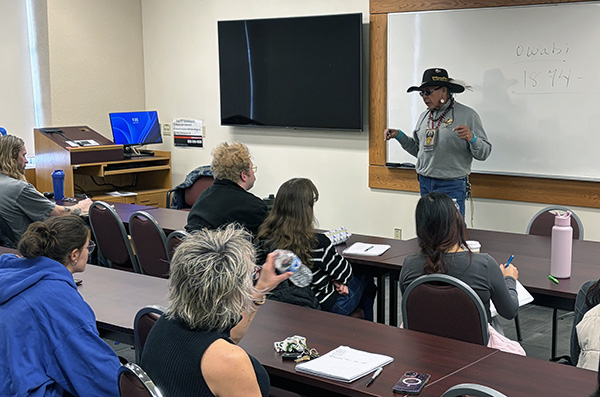
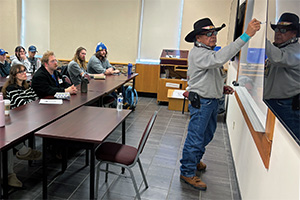
Eashappie shared his experiences with students at St. Thomas More College over the winter semester, along with Judy Pelly, a respected Anishinaabe-Saulteaux Knowledge Keeper.
Each elder visited nine classes, reaching the ears of more than 840 students as part of an initiative now in its fourth year. They were invited by STM Scholar in Indigenous Education Harry Lafond, and the professors of those courses, to bring Indigenous ways of knowing into the classroom.
“When I come here and talk to these guys, it’s a brand new area for the students,” Eashappie said. “It's something they never heard before or read inside of a book. It's basically stories that over time, have been hid from the general public because it's something that the old people shared only with families.”
“And it's always the best way for them to, uh, get to know about First Nations content, from somebody who lived it.”
Pelly echoed that sentiment at a recent appreciation luncheon honouring the work of the two Knowledge Keepers.
“I try to bring life to why intergenerational trauma is very much a part of what happened to to us as Indigenous people,” Pelly said. “And to share those experiences of living in poverty and alcoholism and sexual abuse and so on.”
“I went through all these things, and I don't look at it negatively. I look at it as a blessing that I did go through all these things because my journey has taken me to where I am now.”
Both were grateful for the chance to help educate STM students, and offer guidance to the College on its path of reconciliation.
They follow in the footsteps of Sol Sanderson in 2023, Lyndon Linklater in 2024, and Louise Halfe and Jasmine Albert in 2025. All gave their time and wisdom to STM College students.
Eashappie also conducts land-based teaching retreats for Saskatoon Public Schools at its Brightwater Science, Environmental and Indigenous Learning Centre. He revels in the pride his work can engender in Indigenous youth.
“No matter what class I may go to and present, some kid -- whether they are Metis or First Nations -- they always come up and tell me who they are and that they're proud of who they are. Good. And that's what we want, giving them back their identity.”
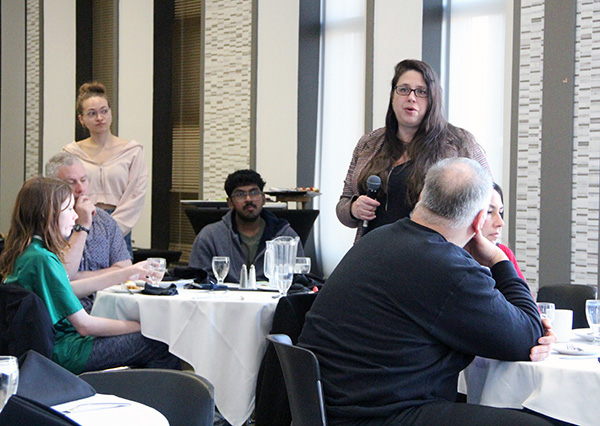
That same influence was felt by one particular STM student who attended the luncheon, and was among those who shared their experiences learning from Eashappie and Pelly.
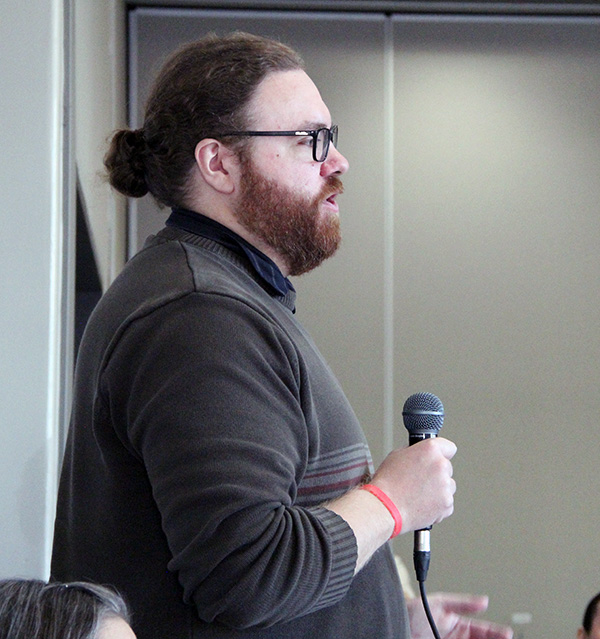
Kaleb Jeffries is a Mohawk/Creel man who stood up to thank Pelly for her presentation to his STM sociology class, taught by Meredith Burles.
“I was just so unbelievably appreciative of you coming in to speak with us. Not only because I am a person, but I'm also Tyendinaga Mohawk and Missanabie Cree. My Tóta and Mushum (grandmother and grandfather) are both residential school survivors, and unfortunately, I was not able to hear their stories.”
“So, hearing from you, and hearing from Louise Halfe last year as well, it's been absolutely incredible to learn about what my family has gone through, and it's done wonders to help reconcile who I am as a person and my personal Identity.”
“Because, yeah, I'm Tyendinaga Mohawk and Cree, but my skin is light and nobody really expects that identity from me. And that's something that I've struggled with my entire life. But this program, and hearing from Knowledge Keepers such as yourself it's done absolute wonders for me as a person.”
Dr. Jennifer Briere has invited Knowledge Keepers into her STM psychology courses each of the four years the program has been running. She is a Metis woman and said she has seen her Indigenous students come up and feel more comfortable self-identifying and participating in their culture, whereas before they said they felt kind of marginalized, and that they should hide who they are.
“After they see how we embrace Indigenous peoples’ stories, culture, and knowledge at STM, they feel a strong sense of welcome and ethnic pride, which I really adore, and I'd love to see that in all of my students.”
Pelly was hopeful her work will continue to have positive effects.
“I thank St. Thomas More College for the great work that they’re doing in opening the eyes of the students and out in the community, because it’s a ripple effect. Hopefully their students share when they’ve learned with others.”
Dr. Tammy Marche, Dean of STM College, reaffirmed the committment of the College in efforts toward reconciliation and the Knowledge Keepers program.
"As part of our Engaged Indigenization priority, in our College Plan 2023, STM will continue to be committed to integrating Indigenous content and pedagogy in our academic programming, strengthening Indigenous relationships, and integrating Indigenous ceremony into College process and procedures," Marche said.